
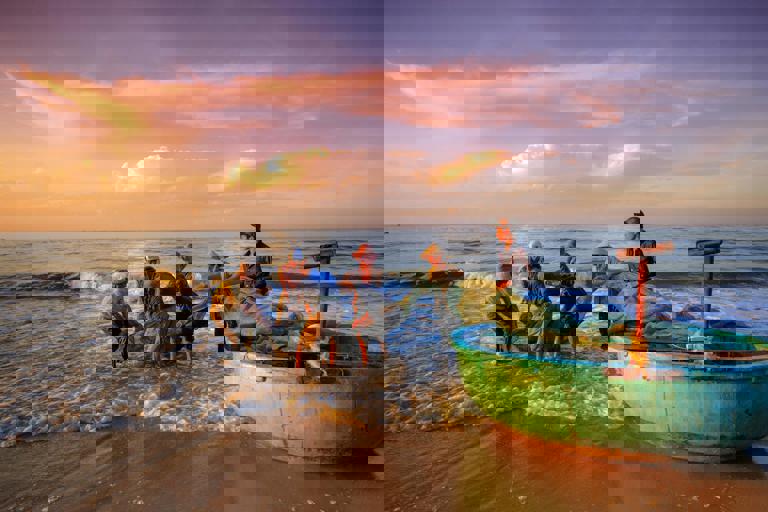
As the golden hue of the evening sun glimmers on the calm waters of Sandbanks, an unmistakable sense of nostalgia has returned to the waterfront. Residents have taken to restoring vintage rowboats, reviving a pastime that once defined the coast’s leisurely charm. These classic wooden boats, with their rich mahogany tones and gentle creaks, are transforming local shorelines into scenes reminiscent of bygone eras.
Local enthusiast and carpenter James Oliver, whose family has lived in Sandbanks for generations, describes the movement as “a return to simpler pleasures.” He recently spent months painstakingly refurbishing a 1930s clinker-built dinghy, a process involving detailed woodwork, brass hardware polishing, and traditional varnishing. “It’s not just about the boats themselves,” Oliver says, “but about keeping the spirit of the coast alive for future generations.”
The resurgence has not gone unnoticed by younger residents, who, often seeking a more tactile connection to history, have joined restoration workshops held on weekends. Craftsmen and seasoned boat restorers host these gatherings, sharing techniques passed down through families. “There’s something truly rewarding about building, maintaining, and rowing your own boat,” explains participant Lucy Harrow, 22, who recently launched her first solo restoration project.
Central to this revival are the sunset gatherings now frequently organized along Sandbanks’ shoreline. Here, residents load their vintage rowboats with blankets, lanterns, and picnic baskets, embarking on gentle excursions as dusk approaches. These events, often accompanied by live acoustic music, have drawn crowds both on the water and along the beach, sparking a renewed sense of community among neighbours.
Historically, wooden rowboats were a staple along the British coast, used not only for leisure but for fishing and ferrying goods. Local historian Margaret Atwell notes that such boats “defined seaside life for much of the early twentieth century.” She adds, “It’s fascinating to see a renewed appreciation for craftsmanship and tradition in a digital age dominated by convenience and speed.”
The appeal stretches beyond nostalgia; for many, it’s about environmental consciousness. Restoring and maintaining wooden rowboats, unlike modern fibreglass or plastic vessels, requires sustainable materials and encourages skills like carpentry and varnishing. This eco-friendly aspect has attracted local environmental groups. Aseco-founder Simon Pitt remarks, "Rowing wooden boats fosters a greater respect for our natural surroundings and reduces plastic pollution in our waters."
The social aspect has become paramount, uniting both long-term residents and newcomers. Over the summer, impromptu regattas and rowing competitions have sprung up, fueling friendly rivalries and pride in craftsmanship. “There’s a certain camaraderie that comes from rowing beside someone in a vessel you’ve restored together,” says Rowing Club member Fiona Blake. "People really come together in ways we haven't seen for decades."
Local businesses are also benefitting from the trend. Boat builders, hardware suppliers, and marine varnish shops have reported increased sales, and several cafes now offer takeaway hampers for evening rowboat picnics. The local council is considering expanding the community boathouse to accommodate the growing demand for storage and maintenance, underlining the movement’s impact on the local economy.
Tourists, often drawn by Sandbanks’ glamorous reputation, are now taking interest in the rowboat gatherings as part of the authentic coastal experience. "Guests are asking about where they can join or watch the evening flotillas," notes hospitality manager Priya Kapoor. This shift has subtly broadened Sandbanks’ appeal, attracting visitors seeking not just luxury but tradition and local engagement.
While not without its challenges—carpentry skills and maintenance costs are significant barriers for some—the revival has prompted discussions about accessibility and education. Training sessions, community tool libraries, and mentorship schemes are in early planning stages. "We want everyone who’s interested to have a way to be involved, regardless of skill or income," says organiser Ben Wilkins, acknowledging the importance of inclusivity.
As the season progresses, Sandbanks’ shorelines are likely to see even more wooden boats gliding across the water at sunset, a testament to the enduring appeal of tradition, craftsmanship, and community connection. What began as a homage to the past has quickly become a vibrant part of the present, proving that even in a fast-paced modern world, old rhythms can find new life by the water’s edge.